Posted on 4th August 2026
People living with Huntington’s disease will have better access to care thanks to our year-long project.
At Severn Hospice, we had noticed that very few people with Huntington’s disease, a progressive condition that affects the brain and nervous system, were being referred to our services, despite the wide range of support we can provide.
After receiving funding from the Freemasons’ Charity through Hospice UK, we set out to understand why this was, and how we could better support people living with the condition.
Gap
Prof Derek Willis, our Medical Director, said: “We knew there was a gap. Huntington’s disease is as common as motor neurone disease (MND), yet we were seeing far fewer people living with Huntington’s disease being referred to our services, and we wanted to understand why.
“People living with Huntington’s disease often have complex needs, but many don’t realise hospice care can support them throughout their illness, not just at the end of life.
“Our project leads Dr Claire Stockdale and Dr Emily Audet did a wonderful job working with healthcare professionals, local support groups, as well as people living with the condition and their families to understand their experiences and where improvements could be made.”
New initiatives
The project team found there were misunderstandings about what hospice care involves and when people should be referred – even many healthcare professionals were unsure about when and how hospices could help.
As a result, we introduced new initiatives, including staff training, stronger links with Huntington’s disease specialists and support groups, new information resources, and a simple “traffic light” guide to help professionals recognise when hospice support could benefit someone.
The impact was immediate, with referrals for people with Huntington’s disease more than doubling during the project.
As well as improving access to hospice care locally, learning from the 12-month project is being shared nationally.
A big difference
For some families, earlier support could make a big difference.
Dr Emily Audet said: “There are so many ways a hospice can support someone living with Huntington’s disease.
“We met a patient who had wanted to put an advance care plan in place, but they were told by their healthcare provider it was too early. By the time they revisited those conversations, the patient’s condition had progressed and they were no longer able to make those decisions themselves.
“That’s exactly the kind of support hospices can provide earlier on, helping people plan ahead and have important conversations at the right time.”
National attention
Our work is now attracting attention beyond Shropshire, with our project team sharing their findings through national conferences, webinars and professional networks to help improve support for people living with Huntington’s disease across the UK.
Emily added: “This project has shown that hospices have an important role to play throughout the journey of someone living with Huntington’s disease, not just at the very end of life.
“We’re proud of what we’ve achieved locally, but we’re also delighted to share what we’ve learned so that more people can benefit from earlier access to the right support.”
Read more about our project here: www.severnhospice.org.uk/huntingtons
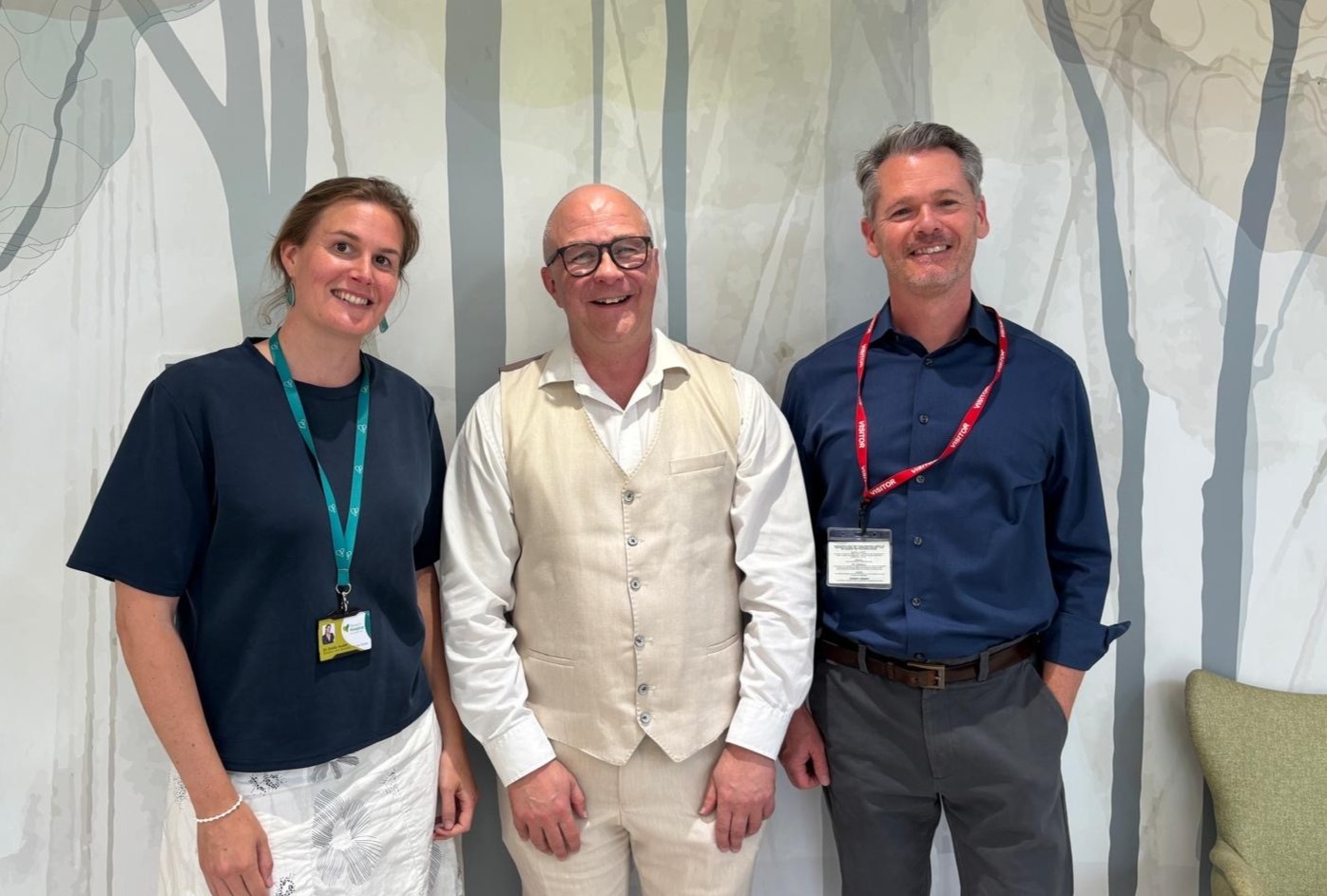
Photo: Project lead Emily Audet with medical director Prof Derek Willis and Karl Benn from Hospice UK.